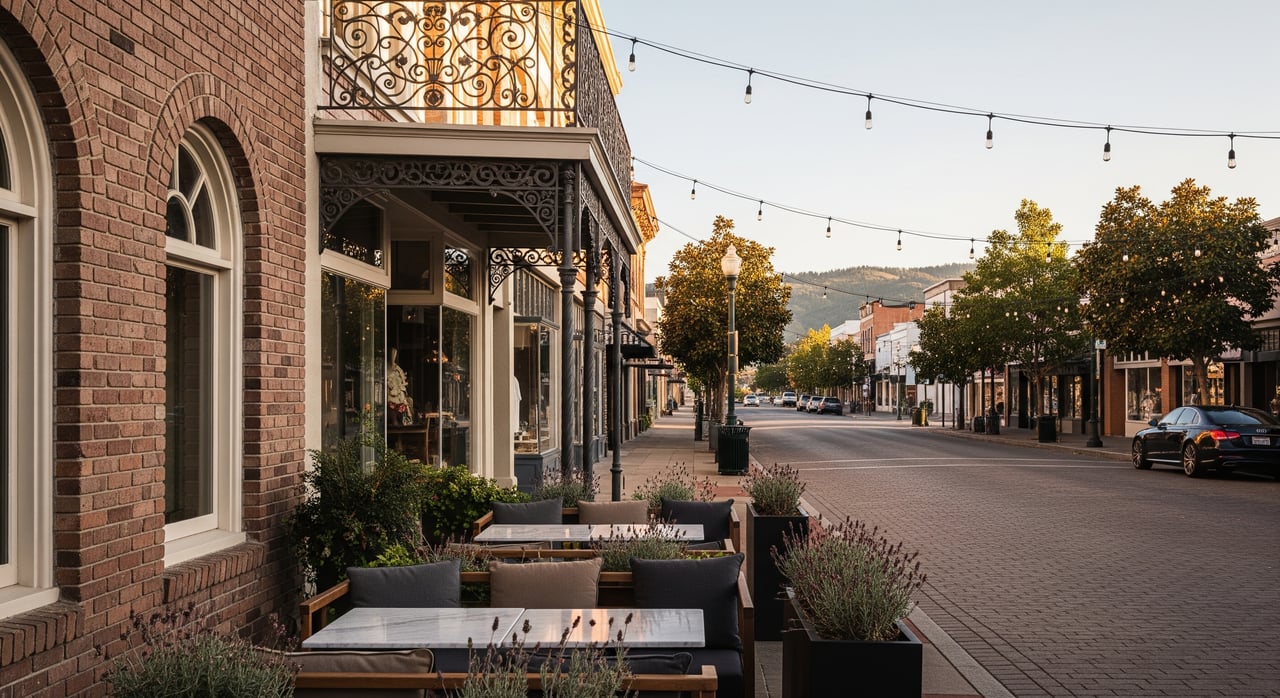
Exploring the Downtown Pleasanton Lifestyle
Ever wonder what your day would look like living steps from Pleasanton’s Main Street? Maybe you’re weighing a Tri‑Valley move or trading a big yard for a more walkable, low‑maintenance lifestyle. This guide walks you through a typical day in downtown Pleasanton, with clear details on commute options, parks, housing, and the tradeoffs to consider. Let’s dive in.
Downtown Pleasanton wakes up early. You can stroll to independent cafés and bakeries clustered along Main Street for coffee, a pastry, or a sit‑down breakfast. The compact core makes quick errands simple, with salons, boutiques, and small specialty markets close together.
For full grocery runs, most residents head just outside the core to larger supermarkets a short drive away. This split is typical of small, historic downtowns that focus on dining and leisure while bigger shopping lives on nearby corridors.
Downtown does not have a BART station. The nearest hub is the Dublin/Pleasanton station several miles away, which many residents reach by driving or using local shuttles. If your job is in Oakland, San Francisco, or the South Bay, you will likely drive to BART or take I‑580 and I‑680 based on your schedule.
Street parking is available downtown, though it can be tighter during popular events and dining hours. Many residents combine walking or biking for short trips with occasional drives for longer commutes or bigger errands.
Weekdays, Main Street offers plenty of quick‑casual spots for lunch, plus sit‑down restaurants when you have time. You’ll also find day‑to‑day services like banking, professional offices, and fitness options in or near the core. Clinics and dentists are close by, with larger medical centers elsewhere in the Tri‑Valley a short drive away.
If you work locally or hybrid, downtown’s walkability keeps midday errands efficient. That convenience is a big reason some residents choose condos or townhomes near Main Street.
When you want a quick nature break, you have options within a short drive. For hiking, trail running, or views, head to Pleasanton Ridge Regional Park. If a lake day fits better, Shadow Cliffs Regional Recreation Area offers water access, fishing, and wide picnic areas.
Neighborhood parks and small plazas near downtown are perfect for an easy stroll, playground time, or a dog walk. Pleasanton has bike routes and regional connections, though most longer trailheads start outside the core, so many residents drive to trail access.
Evenings are lively around dinner, especially on weekends. You’ll find full‑service restaurants, wine bars, and casual pubs that make it easy to meet friends without getting in the car. Nightlife tends to be relaxed rather than late‑night, with conversation, small live music, and al fresco dining in season.
Community events are a core part of downtown life, including seasonal farmers’ markets, summer concerts, street fairs, and larger annual festivals. For dates and details, check the City of Pleasanton event listings, which also link to many downtown happenings.
The downtown core is the most walkable part of Pleasanton, with short distances between coffee, dining, shops, and services. Surrounding single‑family neighborhoods become more suburban and car‑oriented as you move outward. Independent tools often rate downtown as walkable to very walkable; you can review area metrics on Walk Score’s Pleasanton page.
Plan on a mix of walking for daily life downtown and quick drives for big‑box shopping or full grocery runs. If walkability tops your list, living in or near the core is the best fit.
Housing in and around downtown skews to condos, townhomes, small apartment buildings, and some older single‑family homes on nearby streets. These properties trade large yards for convenience and lower maintenance. Across Pleasanton, single‑family homes are more common in surrounding neighborhoods with easy access to Main Street by car.
Home prices in Pleasanton are generally above county and national medians, and the market can be competitive. Downtown locations often carry a premium due to walkability and Pleasanton Unified School District boundaries. For many buyers, the decision comes down to budget, commute needs, and whether a walkable lifestyle outweighs the desire for private outdoor space.
Downtown and nearby neighborhoods are served by Pleasanton Unified School District, which many families consider when choosing a home. For enrollment details, boundaries, and programs, review the district’s site at Pleasanton Unified School District. Always verify current school assignments before you buy or lease, as boundaries and policies can change.
Downtown Pleasanton appeals to a mix of people who value walkable dining and small‑town charm within the Bay Area. Young professionals often like the easy coffee‑to‑commute routine, while many empty nesters prefer lower‑maintenance living close to restaurants and events. Families who want more space often choose nearby single‑family neighborhoods with quick access to Main Street.
Pros
Tradeoffs
If you want a walkable, community‑oriented lifestyle with dining, errands, and events close at hand, downtown Pleasanton delivers. You trade yard size for convenience, and you plan your commute around driving to BART or hopping on the freeways. For many, the neighborhood feel, schools, and access to parks make that balance worth it.
If you’re weighing options near Main Street or exploring nearby neighborhoods with more space, our team can help you compare lifestyle, commute, and budget by street. For tailored advice and available homes, connect with McGuire Olson Real Estate.


McGuire Olson Real Estate are responsive, enthusiastic, and professional. They have built a solid reputation and a vast network of local connections to aid and assist their clients in every aspect of their transactions.
Tim McGuire | CA DRE# 01349446
[email protected]
Lori Olson | CA DRE# 02004247
[email protected]
925.517.MORE (6673)
900 Main St STE #101 Pleasanton CA 94566