Why Danville Sellers Order Sewer Lateral Inspections Early
If you're getting ready to list a home in Danville, there's a good chance you've already read a Bay Area seller's guide that mentions a mandatory sewer lateral inspection standing between your listing and a closed escrow. Ask around Danville and Alamo and you'll find that assumption doesn't hold here. Central Contra Costa Sanitary District, the utility that serves Danville, Alamo, Walnut Creek, and portions of San Ramon, has no ordinance requiring a lateral inspection or a compliance certificate before a home changes hands. Central San says so on its own site, as of this writing: testing is encouraged, never enforced.
That's not the end of the story. It's the start of a more useful one, about what actually happens to an aging pipe under a Danville front lawn when nobody is legally required to look at it before the sale closes.
The East Bay's sewer rules are a patchwork, and Danville sellers who search for guidance online are just as likely to land on a page describing someone else's district. Castro Valley Sanitary District has required a valid Sewer Lateral Inspection Exemption Certificate before close of escrow since July 1, 2019, under Ordinance No. 179. EBMUD's Regional Private Sewer Lateral Program requires a compliance certificate for homes in Oakland, Alameda, Albany, Emeryville, Piedmont, El Cerrito, Kensington, and Richmond Annex, triggered by a sale, a remodel permit over $100,000, or a water meter size change. Both are real rules, in real Bay Area cities, and neither one touches a parcel inside Central San's boundary.
Here's how the three compare directly:
| District | Covers | Point-of-sale requirement | What triggers it |
|---|---|---|---|
| Central Contra Costa Sanitary District | Danville, Alamo, Walnut Creek, Lafayette, Moraga, Orinda, Pleasant Hill, portions of Martinez and San Ramon | None | Encouraged only, never enforced |
| EBMUD Regional Private Sewer Lateral Program | Oakland, Alameda, Albany, Emeryville, Piedmont, El Cerrito, Kensington, Richmond Annex | Yes, compliance certificate required | Property sale, remodel permit over $100,000, or water meter upsize |
| Castro Valley Sanitary District | Castro Valley | Yes, since July 1, 2019 | Sale of the property |
A seller who reads about Castro Valley's certificate or EBMUD's triggers and assumes Danville works the same way isn't careless. The assumption is a reasonable read of a genuinely inconsistent region. It's just wrong for this specific address.
Central San's own rules are clear about one thing regardless of the ordinance gap: the property owner is responsible for the entire lateral, from the house all the way to the connection at the main sewer line, including the stretch that runs under the sidewalk and the street. That responsibility doesn't pause just because nobody is required to check on it before a sale.
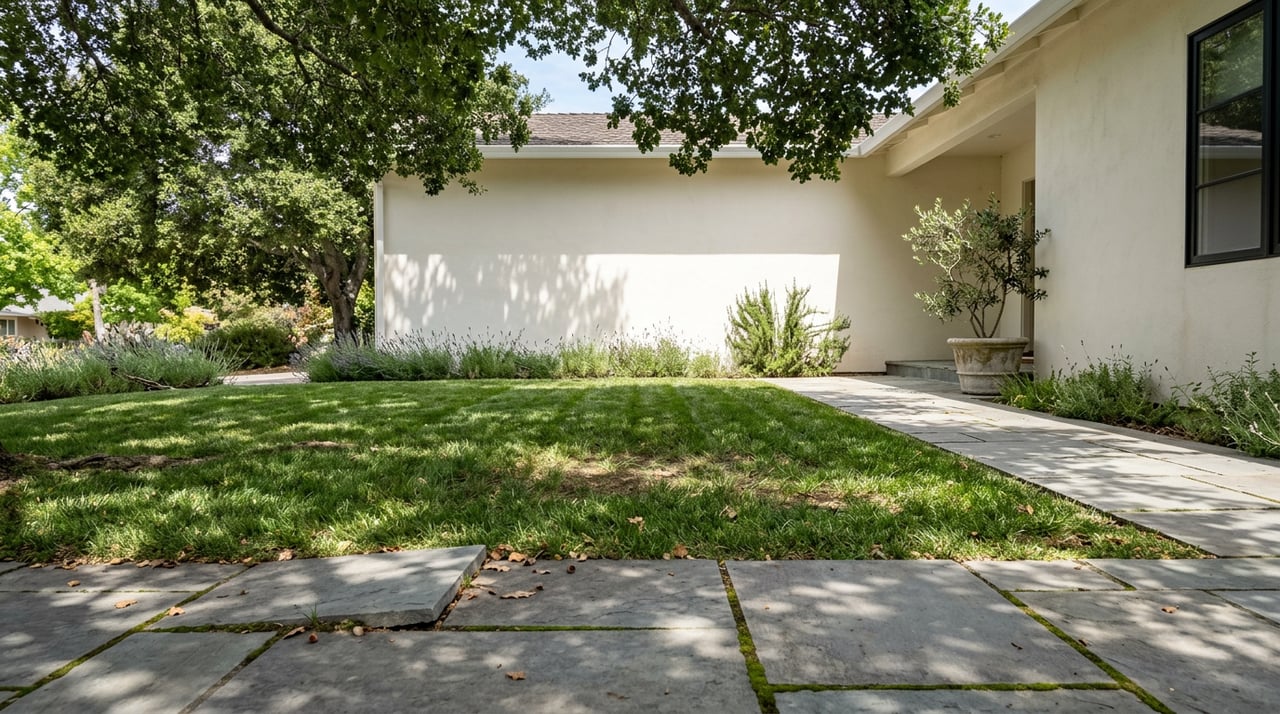
Root intrusion from mature trees is the most common reason older laterals fail, and Danville was built around its tree canopy. The Iron Horse Regional Trail runs 32 miles through town, and the streets feeding into it, along with the older sections around downtown, carry the same aging clay and cast iron pipe common across the East Bay's established suburbs. None of that shows up on a listing photo. It shows up on a camera run down the pipe, and right now, in Danville, nobody but the seller has a reason to schedule that camera before an offer is accepted.
The absence of an ordinance doesn't mean the sewer line disappears from the transaction. It means the discovery moves later, and lands on the buyer's side of the table instead of the seller's.
Once a buyer is in contract, most home inspectors either flag sewer condition directly or recommend a separate sewer scope, especially on an older property. If root intrusion or a cracked section turns up during that inspection contingency, the seller is negotiating from a weaker position than they would have occupied before listing. The price is already set. The buyer has just found a defect. And in California, the Department of Real Estate's 2026 Real Estate Law excerpts show that once a seller knows about a problem like this, it needs to be disclosed, which means the conversation about who pays for the fix happens under time pressure, with a closing date already on the calendar.
That's the real requirement in Danville. Not a district ordinance. A due diligence culture that catches the same defect anyway, just later, and on less favorable terms for whoever is selling.
A seller who wants to control that conversation instead of reacting to it has a short list of things to do before the home ever hits the market:
Alamo sits inside the same Central San territory as Danville, which means it carries the same absence of a point-of-sale ordinance and the same incentive to test the lateral voluntarily before going to market. The district doesn't draw a different line for Alamo's older streets than it does for Danville's. If your home predates the last few decades of construction, the same reasoning applies regardless of which of the two towns it sits in.
Do I have to fix a failing lateral once I know about it? Once a seller knows about a defect, it needs to be disclosed, and most buyers who see a known problem in a disclosure will ask for either a credit or a completed repair before they'll close. Testing early just moves that negotiation to a point where the seller still has room to decide how to handle it.
What does a voluntary inspection cost? Castro Valley Sanitary District, which does require testing, currently lists a $330 fee for its witnessed inspection process. A comparable voluntary camera inspection through a private contractor in Danville or Alamo tends to fall in a similar range, though Central San doesn't set or collect a fee of its own since it doesn't administer a testing program.
Does this change if I'm selling in Walnut Creek or Lafayette instead? No. Central San's service area, which covers Walnut Creek, Lafayette, Moraga, Orinda, Pleasant Hill, Danville, Alamo, and slices of Martinez and San Ramon, applies the same policy across every one of those communities. The absence of a point-of-sale ordinance is a district-wide position, not a gap specific to any one town.
Selling an established Danville or Alamo home comes with more of these quiet, easy-to-miss variables than most national guides ever mention. McGuire Olson Real Estate built its pre-listing process around catching exactly this kind of detail before a buyer's inspector does. Request a complimentary market consultation and we'll walk your specific address through what actually needs attention before it goes on the market.
This article is general information, not legal, tax or financial advice. Consult a qualified professional about your situation.






McGuire Olson Real Estate are responsive, enthusiastic, and professional. They have built a solid reputation and a vast network of local connections to aid and assist their clients in every aspect of their transactions.
Tim McGuire | CA DRE# 01349446
[email protected]
Lori Olson | CA DRE# 02004247
[email protected]
925.517.MORE (6673)
900 Main St STE #101 Pleasanton CA 94566